
Inventing Visual Language
How "Cattle Drive" Helped Me Break Through a Complex Narrative

In this piece, I will explain how a preliminary artwork in a graphic novel helped me find a visual language for the unprotected child in the story.
hooking the reader
The graphic novel Coyote Girl attempts to adapt an oral European fairy tale about the king’s daughter who, after the queen dies, catches the king’s eye in such a way that he forces her to marry him. Using her wiles and the help of a fairy godmother, the girl escapes—or does she?
Sexually abused children have no way to protect themselves from the abusive adult. Boundaries are smashed, trust violated, and the child’s right to her/his body hijacked.
To hook the reader, I created a Prologue hinting at the story’s central problem: how can a child be safe in her own body when sexualized by her only remaining parent?
Using a cinematic compositing style, I photographed actors, including a nine-year-old protagonist, the cattle-baron “king,” and his ranch foreman. The child never met the adults in real life, yet each actor had to convey emotionally charged interactions so I could composite all together in the final artwork.
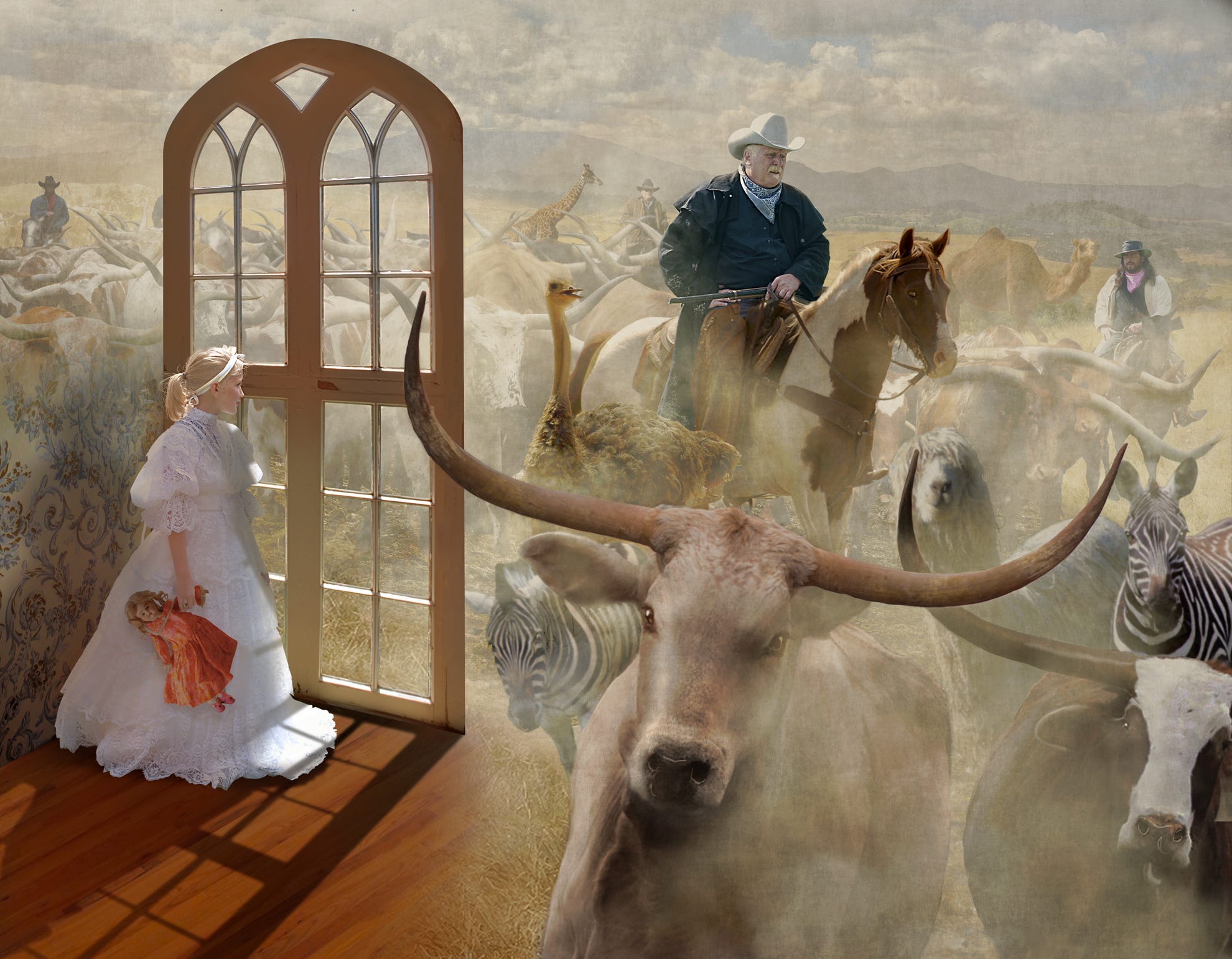
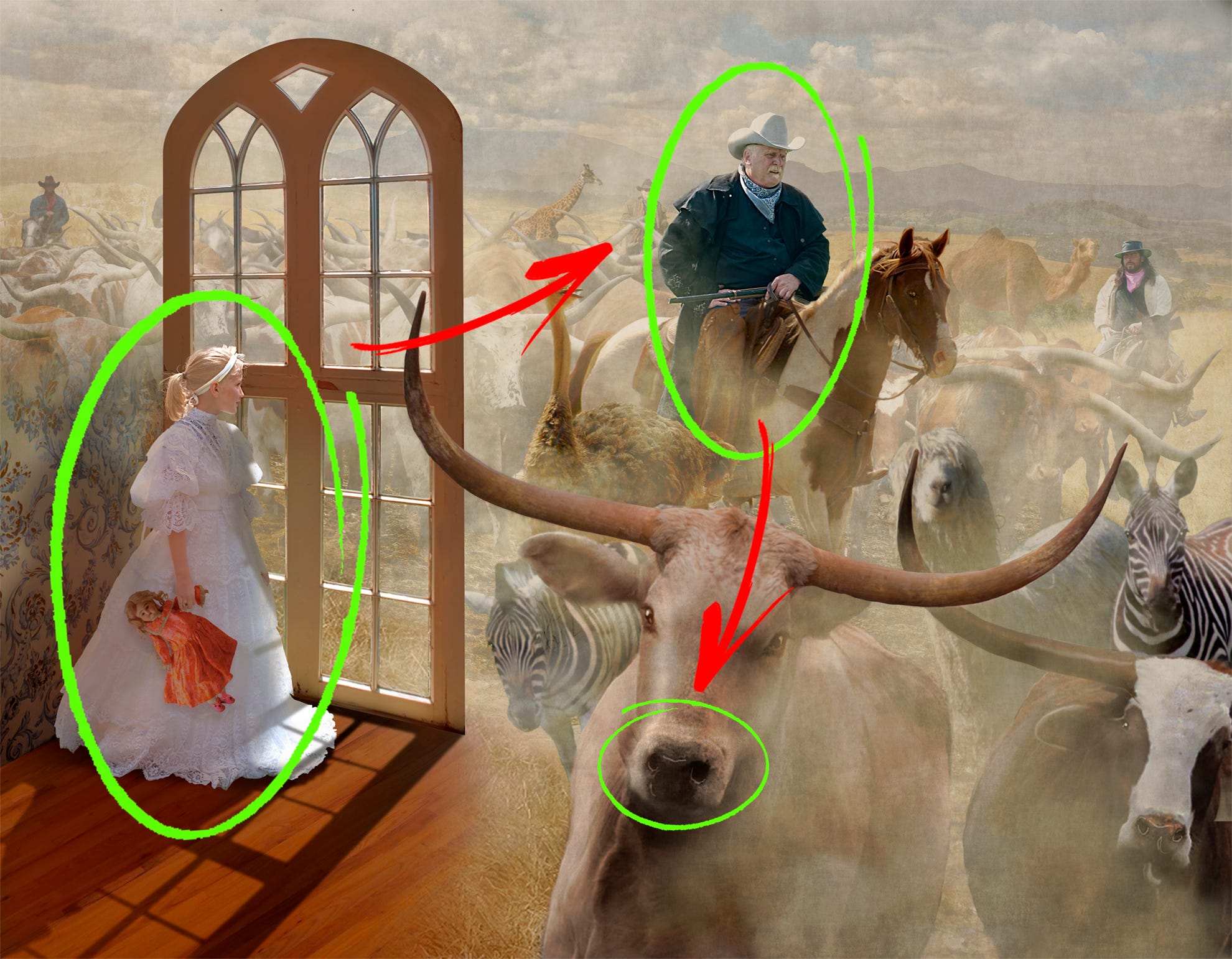
“Cattle Drive” is the first image the reader sees after the Prologue. This artwork establishes the protagonist’s vulnerability, the father’s selfish obliviousness of his own child’s world, and a chaos of stampeding beasts to immerse the reader in a sense of unstoppable danger.
the photo shoot
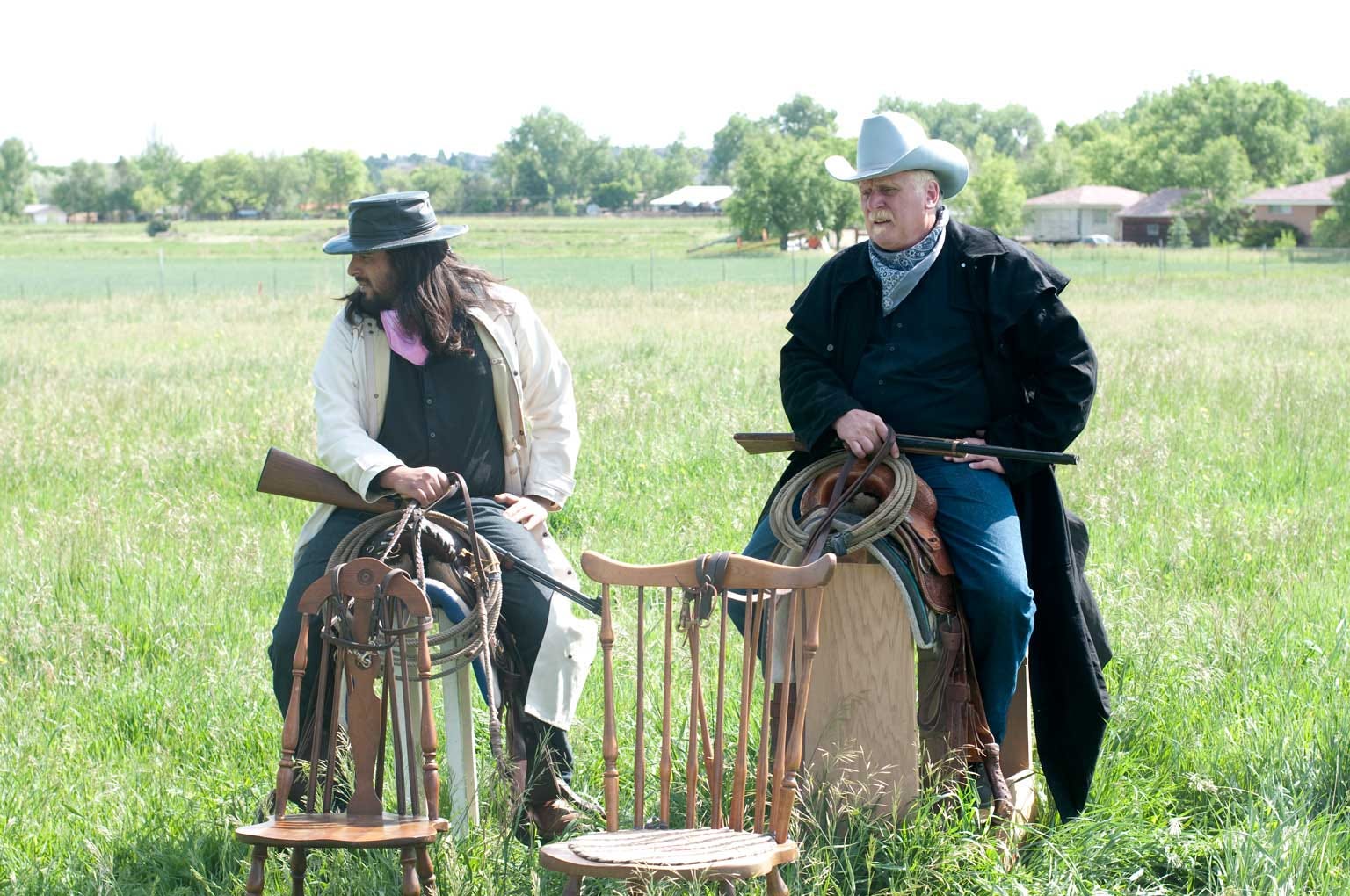
I coached the actors to pantomime driving a large herd, watching for stragglers while swaying back and forth as though mounted on horseback. The high point of the composition I intended as cattle baron’s head, so I positioned my camera accordingly.
post-production
In Photoshop, I masked stock photos of cow horses to replace the principal sawhorse photography with the actors.
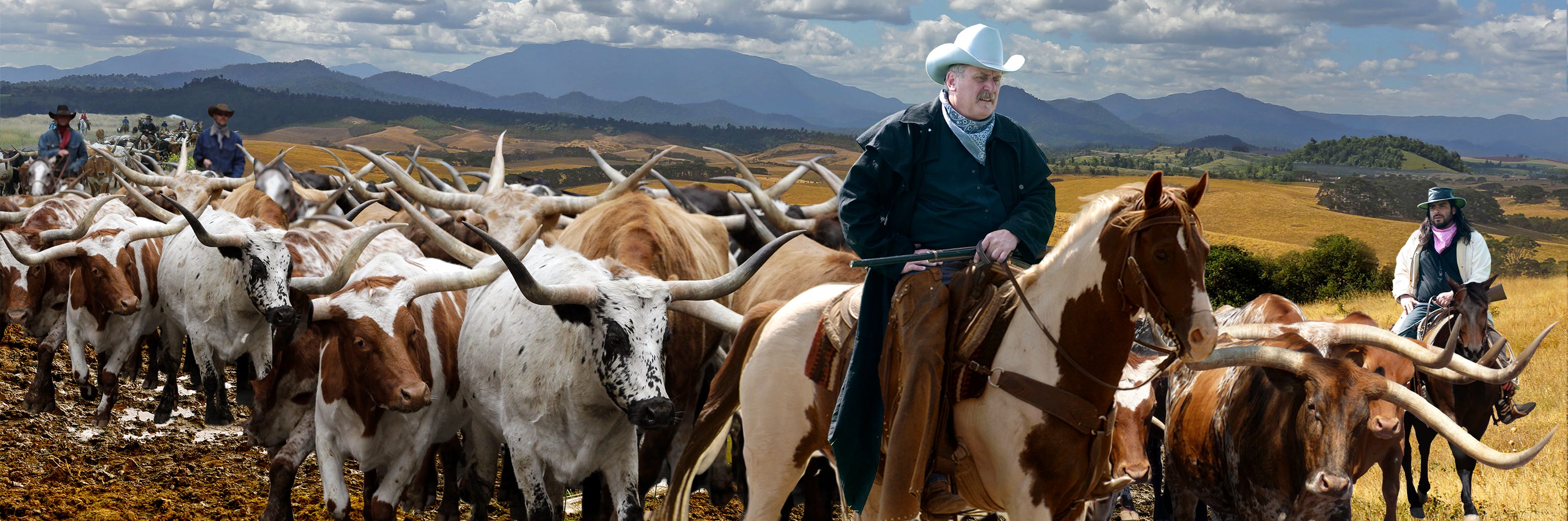
The first step was to cut out the main figures of the cattle baron and his foreman and place them into a Western landscape, keeping the cattle baron/father’s head as the high point—higher than the tallest mountain in the background. Stock imagery of charging longhorns layered into the scene along with two rear wranglers.
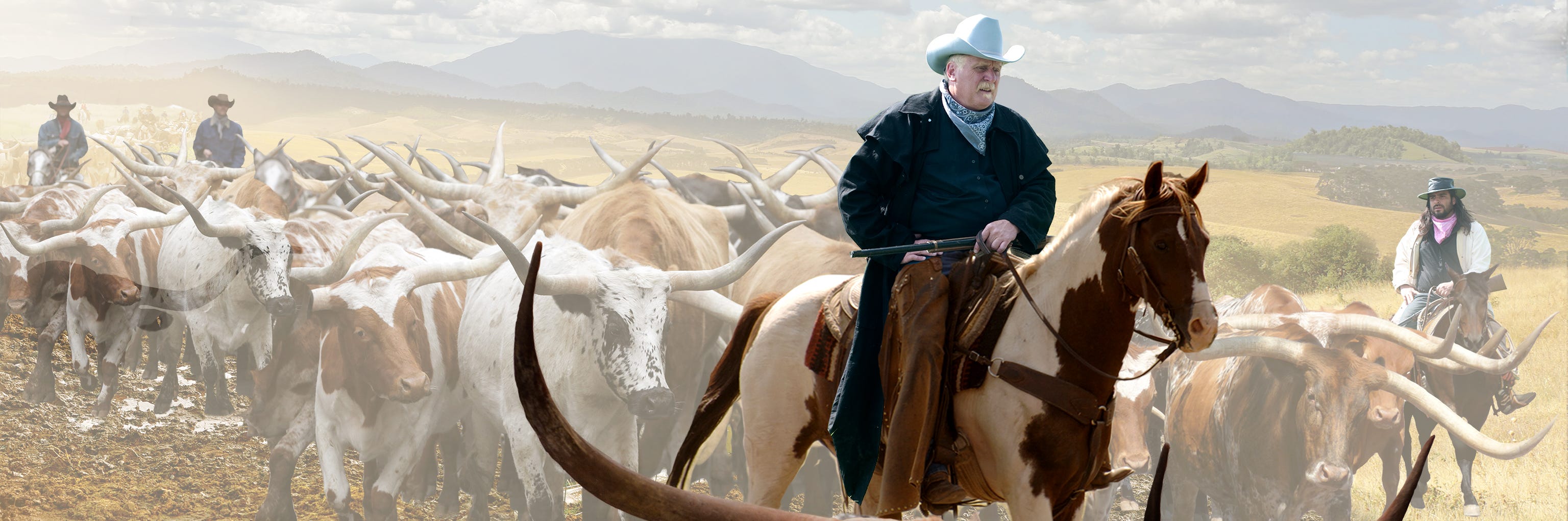
Telling any story means focusing on the antagonist and protagonist—and keeping each legible in a crowd scene. I used layers of dust to create low contrast and heighten the chaos and somatic effect of the tumultuous action.
storybook lighting
Placing the young actress into the cattle drive scene involved creating a separate, semi-safe space for her inside the home. I wanted the protagonist behind a window with the illusion of being safe inside her home.
She holds her doll and gazes out as her papa returns from a long cattle drive. I chose a white dress for innocence and purity, with a deliberate bridal reference. The doll dangling from her hand becomes both her imaginary playmate and a body double for acting out her distress as the story advances—hence, the red doll dress.
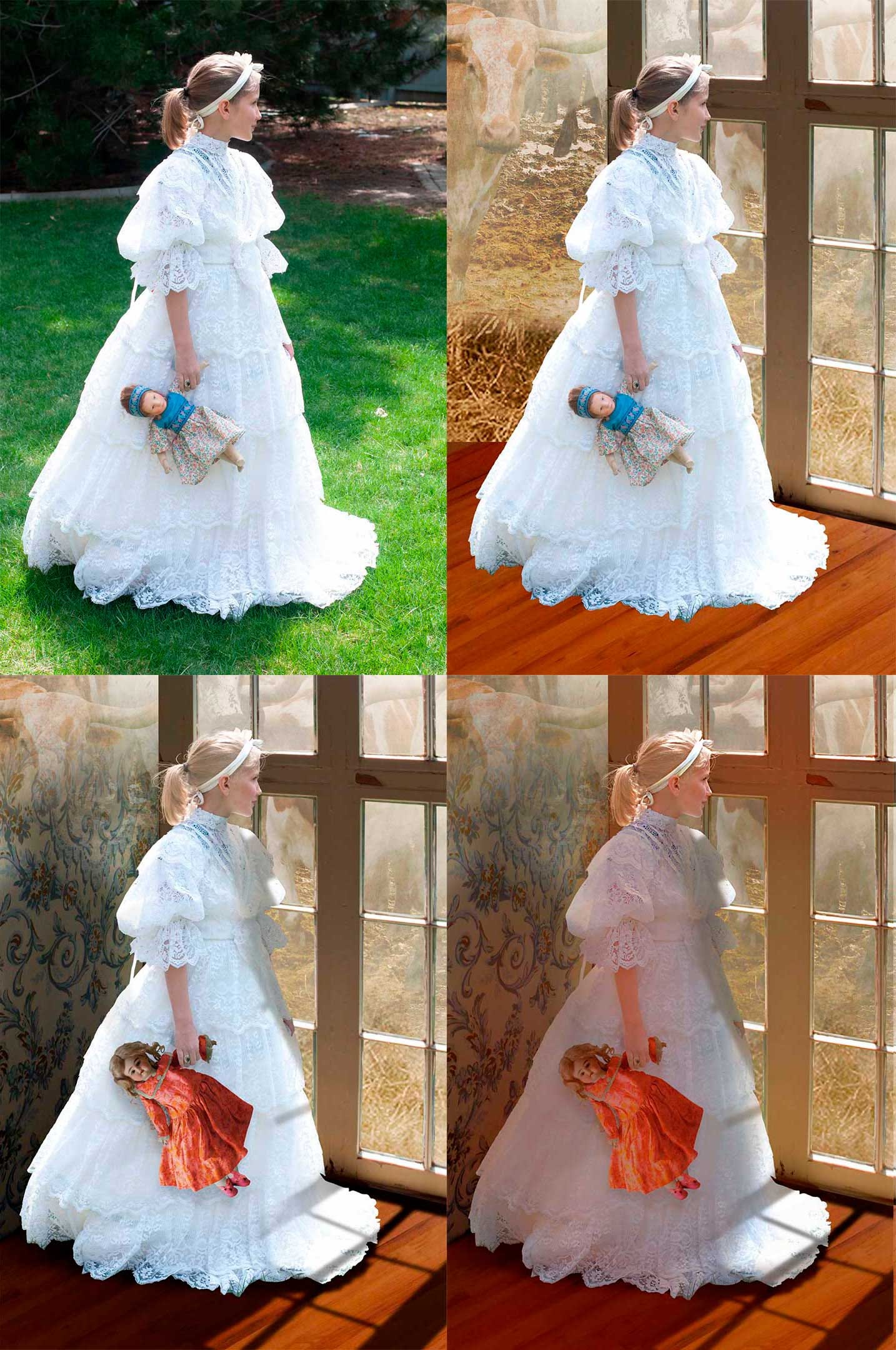
For the final lighting treatment, I developed a filter algorithm using Boris FX Optics.
what i thought as i created
Fairy tales are designed to haunt the listener. Every child has their favorite fairy tale, the one they never tire of hearing read aloud because this particular tale expresses their deep psychological truth and shows them—in dreamlike language—the solution.
The fairy tale on which Coyote Girl is based has haunted me from the first moment I read about it, in Marion Woodman’s book Leaving My Father’s House. Of course I thought about the story, how the perpetrator rarely gets punished, how the child survivor is affected for the rest of her life. I started work on this piece before MeToo, before the Epstein files. I thought about how, in the fairy tale, the King is never punished and the abused girl just has to find her way in life.
I wondered what makes adults sexually abuse children—coaches, doctors, family members. I thought about how contagious is the disease of sexual abuse: how the perpetrator cannot stop, how the survivor is abused over and over again, as though she wears a sign on her back that only other perpetrators can see. I thought about all the things a survivor has to learn how to do, in order to reclaim her body, protect herself, and stop the toxic pattern.
Mostly, I hoped to use my talents and skills to help bring healing to survivors, understanding to bystanders who turn away, and ultimately more consciousness to the fact that the punishment of jail time doesn’t cure the perpetrator’s disease, as pointed out in this video.
Thank you for reading, sharing, and hopefully bringing compassion to anyone you know who has survived sexual abuse as a child.
Brilliant and profound perspective on the crime of child sexual abuse. The artwork vividly illuminates the problem with intense vision and masterful skill. Addessing the need for more focus on and understanding of this terrible evil so prevalent in our society today.
The use of layers of dust to create low contrast and heighten the chaos in the crowd scene is a brilliant technique that effectively emphasizes the antagonist and protagonist. Additionally, the thoughtful placement of the young actress in the cattle drive scene, creating a semi-safe space behind a window, adds depth to the narrative. The choice of a white dress for innocence and the red doll dress for distress is both symbolic and visually striking.